 TIANQIU
The first line of most battery enquiries is “what is your MOQ?”, and the honest answer is that there is no single number. Two orders for the same cell, in the same quantity, can land on completely different minimums — because the minimum is not set by the cell. It is set by the change that has to happen before the cell can be made and packed.
Buyers who understand that get better quotes, because they can see which part of their request is expensive and which part is free.
What actually sets a minimum order?
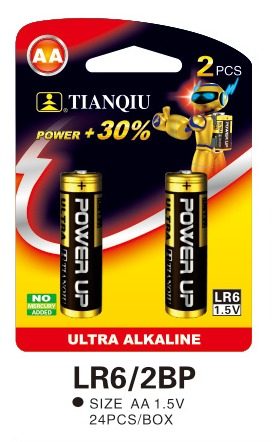
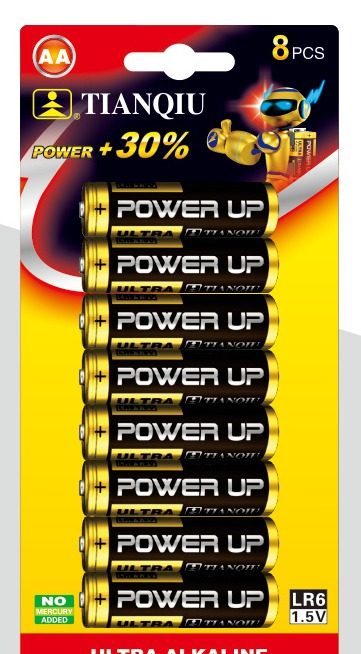
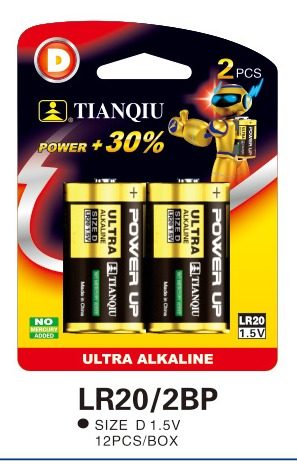
The production line. A line is set up for one cell size, one chemistry and one height at a time. Changing to a different cell means stopping, purging and re-setting. A factory will absorb that cost for a large run, not for a small one. This is why a 50-carton run of a standard AA is easier to schedule than a 50-carton run of an unusual size.
The packaging run. If you want a blister card or a printed retail box, the packaging is manufactured and printed separately from the cells. The packer is also set up per format. This — not the cells — is usually the real reason a minimum exists.
The artwork. Your artwork is not a file, it is a set of print plates and a dieline. First time round those have to be prepared and proofed. Second order of the same pack, nothing changes, so the minimum is no longer the barrier it was.
What are our own MOQ tiers?
| Product line | MOQ | Why it sits there |
|---|---|---|
| Button cells — CR lithium, AG / SR alkaline & silver-oxide | 50 cartons | Blister cards and printed boxes are made to your artwork, so the print setup, not the cell, is what the minimum is built around |
| AA / AAA alkaline | 50 cartons | High-volume lines, fastest turnaround once the specification is frozen |
| C / D zinc-carbon | 50 cartons | A heavier cell, but the same first-order minimum as the rest of the range |
| Zinc-air (hearing aid) | 50 cartons | Tabbed or untabbed, packed for medical channels |
| Rechargeable NiMH and custom packs | Project-based | Built to a drawing with connectors and BMS, quoted after design and sampling |
Our published tiers. Bulk orders and mixed-model containers are quoted separately — the packaging, not the cell, is normally what moves the number.
What moves the minimum down?
- Start from a model we already run. A stocked cell has no line changeover and no new tooling. Your brand can still be printed on the cell itself without touching the packaging minimum.
- Ship it in bulk. A plain, labelled carton needs no print run at all. Plenty of distributors take their first order this way and add retail packaging once the product has proven itself.
- Order several models together. If a container is filled with a mix of AA, AAA and coin cells, one production schedule covers the whole shipment. Tell us the split with the enquiry.
- Reuse artwork you already have. If a card or box has been printed before — with us or elsewhere — ask for a dieline match. You are then paying for reprinting, not for creating.
What moves the minimum up?
- New artwork, new languages, new market. A multi-language retail pack with mandatory warnings for a new market is a fresh print project every time.
- An unusual size or chemistry. If the cell is not on the line, it has to be scheduled on it.
- A custom pack assembly. Spot welding, connectors, a housing and a BMS are all made-to-order operations, so a pack is quoted per project rather than per tier.
How do you compare two quotes fairly?
A unit price means nothing without the quantity it applies to, so ask four questions before you compare:
- At what volume does this price start? A price for 200 cartons that is being quoted against a 50-carton minimum is not a comparable number.
- Does the MOQ include the packaging? Some suppliers quote a cell minimum and then a separate, much higher packaging minimum.
- Is the sample charge refundable against the order? This is normal practice and worth confirming in writing early.
- What happens on the second order? Cost and lead time on a repeat should be better, because the plates and the specification already exist.
What do we need in order to quote you?
Send the cell or the device, your annual quantity, the packaging format you want, and the market you are selling into. That is enough to tell you whether you are looking at a bulk minimum or a packaging minimum — and often to suggest a cheaper route to the same shelf. If you are not sure which cell you need, the number printed on the old one is enough: our model index cross-references the interchangeable numbers, and wholesale pages set out the tiers.
Ready to test the numbers with a real quotation? Tell us the model, the quantity and the pack format and you will get a figure, not a range.