 TIANQIU
Most coin-cell problems are decided on the mechanical drawing, long before anyone talks about price. This is the short version of how we help customers settle it.
Why start from the holder, not the datasheet?
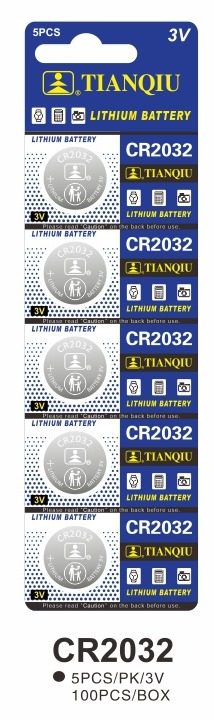
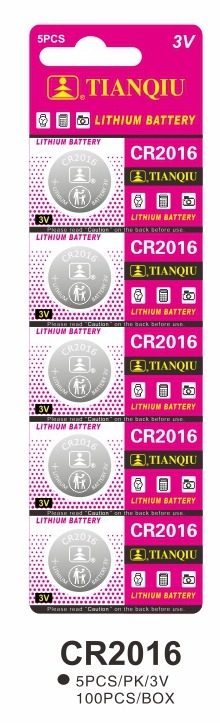
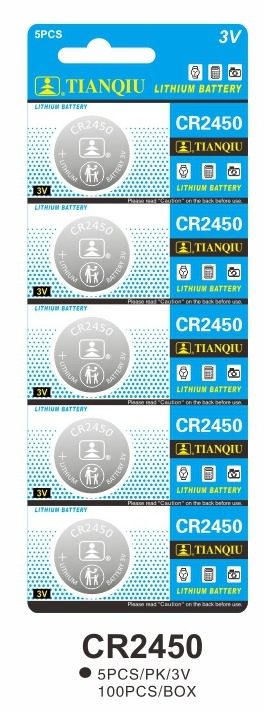
The holder defines the thickness you can use. Measure the internal height and the contact travel, then pick the cell that sits in the middle of that range — not the one that just barely closes.
| Model | Voltage | Size (Ø × H) | Capacity | Also marked as |
|---|---|---|---|---|
| CR2032 | 3.0V | 20 × 3.2 mm | 190mAh ~ 255mAh | 5004LC · ECR2032 · KCR2032 · DL2032 |
| CR2025 | 3.0V | 20 × 2.5 mm | 130mAh ~ 185mAh | ECR2025 · 5003LC · DL2025 |
| CR2016 | 3.0V | 20 × 1.6 mm | 75mAh ~ 100mAh | ECR2016 · 5000LC · DL2016 |
| CR2450 | 3.0V | 24.5 × 5.0 mm | 550mAh ~ 620mAh | ECR2450 · DL2450 |
Live figures from our own product data — the same numbers that appear on our model pages.
Rule of thumb: if the lid has to be pressed down to close, the cell is too thick. If the cell rattles before the lid is closed, it is too thin and it will lose contact when the product is dropped or shipped.
How do you budget capacity, not just size?
A backup cell is usually sized by how long it must last between services, not by peak current. Two ways to read the table above:
- Same diameter, different thickness — CR2016 to CR2032 in the same 20 mm footprint can double or triple the standby life.
- Bigger diameter — CR2450 gives you 24.5 mm of area when the enclosure allows it, which is the usual answer for devices that must survive years without a battery change.
If the requirement is “five years on the shelf plus three in the field”, put that number in the specification. We will confirm it against the discharge curve instead of approximating it from the mAh figure.
Why name the cell the way your supply chain does?
Every cell travels under several numbers: CR2032 is also ordered as DL2032, ECR2032, KCR2032 or 5004LC, and the pattern repeats across the range.
The safest specification has two lines:
- the IEC-style model (CR2032), and
- every equivalent your drawing or your customer’s packaging already shows.
That is exactly how we build the cross-reference table on this site — from the data we hold for each model, not from memory.
Where do the cells actually come from?
The same cells are produced on our own lines, then printed, blister-carded and boxed for the brand on the front.
What should you send us for a quote?
- the cell or equivalent number,
- the packaging format (bulk, blister, your own artwork),
- the annual quantity and the market you sell into.
With those three, we reply with the equivalent model, the unit price, the MOQ band and the lead time.