 TIANQIU
Batteries for Medical Devices
Which batteries do medical devices use?
Medical devices almost always run on coin cells rather than cylinders. Silver-oxide (SR) cells are chosen where a stable voltage matters — glucose meters, thermometers and hearing instruments — while lithium (CR) cells suit monitors, sensors and anything that has to sit unused for years before first use.
| Model | Chemistry | Voltage | Size (dia × h) | Capacity | Common equivalent |
|---|---|---|---|---|---|
| SR44 | Silver oxide | 1.55V | 11.6 × 5.4 mm | 175mAh | AG13 · LR44 · A76 · 357 |
| SR626 | Silver oxide | 1.55V | 6.8 × 2.6 mm | 27mAh | AG4 · 377 · SG4 |
| 377 | Silver oxide | 1.55V | 6.8 × 2.6 mm | 24mAh | SR626SW · AG4 · SG4 |
| 371 | Silver oxide | 1.55V | 9.5 × 2.1 mm | 38mAh | SR920SW · AG6 · 370 |
| 364 | Silver oxide | 1.55V | 6.8 × 2.1 mm | 18mAh | SR621SW · AG1 |
| CR2032 | Lithium (Li-MnO₂) | 3.0V | 20 × 3.2 mm | 190 – 255mAh | 5004LC · DL2032 · ECR2032 |
| CR2450 | Lithium (Li-MnO₂) | 3.0V | 24.5 × 5.0 mm | 550 – 620mAh | DL2450 · ECR2450 |
Capacities are the published range for each model in our EU 2023/1542 product data. A device drawing pulse current will see less than the nominal figure — ask us for the discharge curve of the exact model before you design the runtime.
Why do medical device makers specify silver-oxide?
Silver-oxide holds a flatter discharge curve than alkaline, so a device reads the same voltage through most of its life instead of drifting downward. That matters when the device infers a result from voltage, and it is why SR cells — not LR cells — sit in most meters.
- Flat discharge curve — the voltage stays close to nominal until the end, so readings do not drift as the cell ages.
- Higher capacity in the same can — SR44 is rated 175mAh against 118mAh for the equivalent alkaline LR44.
- Long shelf life — a device that sits in a warehouse before first use keeps more of its capacity.
- Mercury-free — our alkaline button cell line is 0% mercury, and the silver-oxide range is built on SOXEY technology from Japan.
Which standards and documents apply?
Primary cells are standardised internationally by IEC 60086-1 for dimensions, nomenclature, terminal configuration and markings, which is what makes an SR44 from one supplier a drop-in for another. Transport adds UN38.3 for lithium cells, and the EU adds Regulation 2023/1542.
| Document | What it covers | Applies to |
|---|---|---|
| IEC 60086-1 | Dimensions, nomenclature, terminals, markings of primary cells | All coin and cylindrical cells |
| UN38.3 | Transport testing for lithium cells and batteries | CR lithium coin cells |
| EU Regulation 2023/1542 | Battery placing on the EU market: labelling, documentation, conformity | Cells shipped into the EU |
| RoHS | Restricted substances in electrical equipment | All cells |
| SDS / MSDS | Safety data for handlers and carriers | All cells on request |
Every model we publish carries its own EU declaration of conformity reference number in the form TQ-EUDOC-<model>-<date>. The full list is on the downloads page — quote the number and we can pull the matching file.
Can you trace a cell back to a production batch?
Yes, within the limits of what is printed on the can. We print a production code on the negative electrode in the form Y-M, for example 64 for 2026-04 or 6X for 2026-10, so a returned cell can be matched to the month it was made. Batch-level records are held against the order.
- Production code printed on the cell:
Y-M(e.g.64= 2026-04,6Y= 2026-11). - EU declaration of conformity reference number per model.
- Certificate set and test reports available through the document request form.
- We do not publish customer order sizes, prices or delivery dates — see the note on the case studies page.
What do we manufacture in-house?
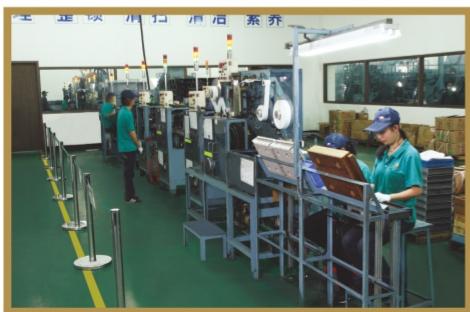
The silver-oxide and alkaline button cell ranges are our own production, run on Japanese MITSUBISHI full-automatic lines inside a 100,000 m² plant. That matters for medical buyers because it means the cell and the specification sheet come from the same organisation rather than a trading desk.
- 31+ years of cell manufacturing, 500+ staff, 100,000 m² plant.
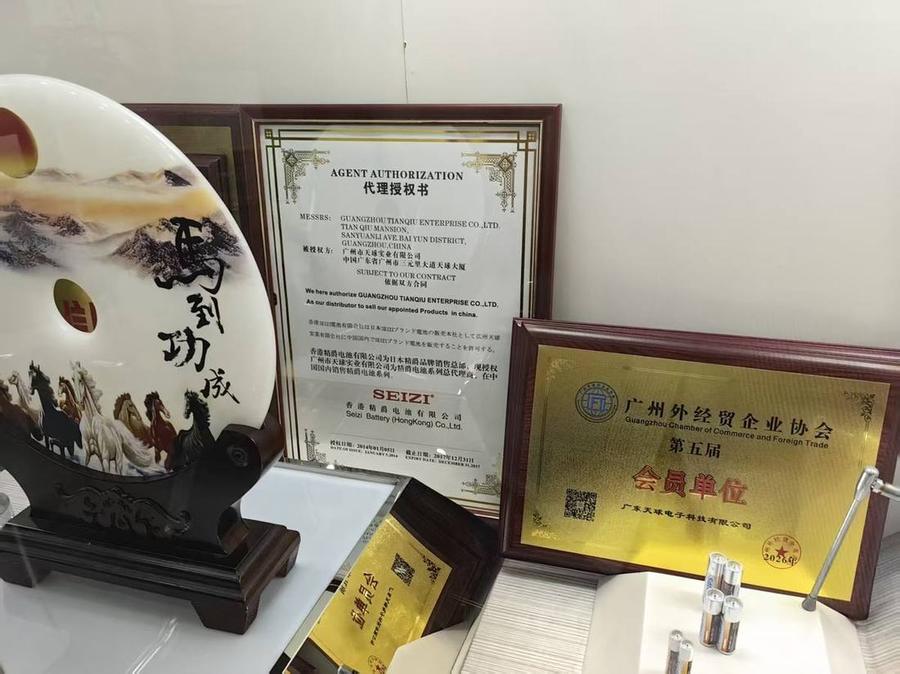
- Silver-oxide technology partner: Japan SOXEY. Sole agent for the SEIZI (Japan) silver-oxide range.
- Certifications published on site: ISO 9001:2015, ISO 45001:2018, BSCI, UL (selected product lines), UN38.3 (lithium cells), CE, RoHS, SGS, PONY, maritime and air transport.
- 0% mercury alkaline button cells.
Frequently asked questions
Can you supply medical coin cells under our own brand?
Yes. The cell is our product and the brand and packaging specification are yours — that is what OEM means here. We print your label and record what we actually produced. Tell us the model, the pack format and the market you are selling into, and we will quote against that.
Which silver-oxide models do you make?
We publish SR44 (175mAh), SR626 (27mAh), 377 (24mAh), 371 (38mAh) and 364 (18mAh), all 1.55V. If the model you need is not on that list, send the part number from your drawing and we will tell you whether it is in the range or a special order.
Do you provide discharge curves?
We publish the capacity range per model and can supply the discharge curve for a specific model on request. We do not publish a generic runtime in hours, because the answer depends on the pulse profile of your device.
What is the minimum order for medical cells?
First orders start from 50 cartons per product line — the same entry point for button cells, alkaline cells and printed packaging. The MOQ guide on the blog explains which variables push the number up or down and which are fixed.