 TIANQIU
The short answer for the most common question: a fresh AA alkaline cell is 1.5 V nominal. Nominal, not exact — a new alkaline cell measures about 1.6 V open-circuit, drifts down through its life, and is considered finished around 0.9–1.0 V under load.
How many volts is a double-A battery?
A double-A battery — the way most people write AA — is 1.5 V nominal in both alkaline (IEC LR6) and zinc-carbon (R6). A fresh alkaline cell reads about 1.6 V with no load and falls towards 1.0 V as it discharges. Rechargeable NiMH AA cells are the exception at 1.2 V nominal.
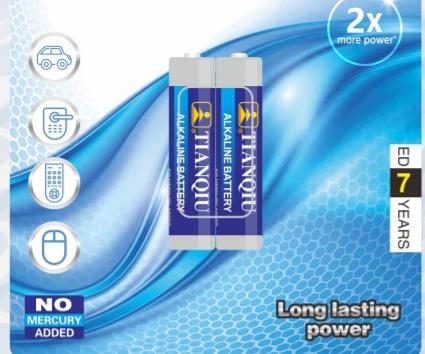
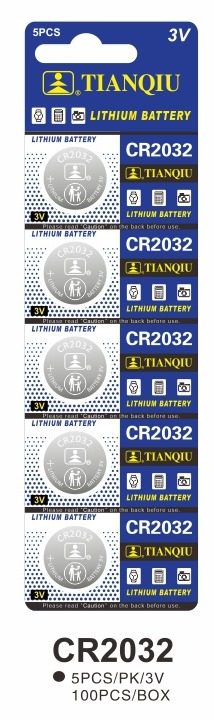
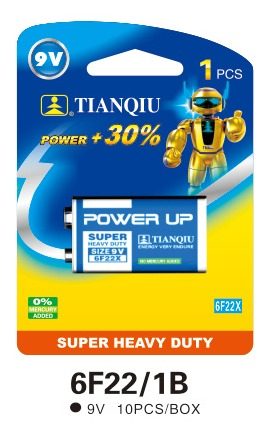
Battery voltage by size: AA, AAA, C, D and 9V
Every household size runs at the same 1.5 V because they share the same alkaline chemistry — what changes with size is capacity, not voltage. The table below lists the IEC code, the common name and the nominal voltage we declare for each line we make.
| IEC code | Common name | Nominal voltage | Typical capacity |
|---|---|---|---|
| LR6 (alkaline) | AA | 1.5 V | 2150mAh ~ 2600mAh |
| LR03 (alkaline) | AAA | 1.5 V | 1020mAh ~ 1260mAh |
| LR14 (alkaline) | C | 1.5 V | see the data sheet for your project |
| LR20 (alkaline) | D | 1.5 V | 18000mAh |
| 6LR61 (alkaline) | 9V block | 9.0 V | 620mAh ~ 640mAh |
| 6F22 (zinc-carbon) | 9V block | 9.0 V | 320mAh (2.88Wh) |
Capacities are the figures we declare for our own cells. A C or D cell is not more volts than an AA — it is more mAh.
Model pages: AA battery (LR6) · AAA battery (LR03) · D battery (LR20) · 9V block data sheet (6LR61)
What is the nominal voltage of each chemistry?
Chemistry, not size, sets the voltage — which is why the same 20 mm coin cell can be 3.0 V as a lithium CR cell and 1.5 V as an alkaline LR cell.
| Chemistry | Example cells | Nominal voltage | Notes |
|---|---|---|---|
| Alkaline | LR6 (AA), LR03 (AAA), LR14, LR20 | 1.5 V | Everyday cells; voltage sags steadily as they discharge |
| Zinc-carbon | R6, R03, 6F22 (9 V) | 1.5 V | Cheaper, lower capacity, better for low-drain use |
| Lithium (coin) | CR2032, CR2025, CR2016, CR2450 | 3.0 V | Flat discharge curve — the reason they suit backups and sensors |
| Silver-oxide | SR44, SR626, 377, 371, 364 | 1.55 V | Very stable — used in quartz watches and instruments |
| NiMH (rechargeable) | AA / AAA rechargeable, USB cells | 1.2 V | Lower nominal voltage; works in most devices despite the label |
| Li-ion (rechargeable) | 18650, pouch cells, battery packs | 3.6–3.7 V | Never interchangeable with a 1.5 V or 3 V primary cell |
| 9 V block | 6LR61, 6F22 | 9.0 V | Physically and electrically incompatible with anything above |
Nominal voltage is the label value. Actual open-circuit voltage of a new cell is higher, and drops under load.
Data sheets for the cells named above: LR6 / AA alkaline · LR03 / AAA alkaline · R6P / zinc-carbon AA · R03 / zinc-carbon AAA.
Why does a 1.5 V cell measure 1.6 V?
Voltage is a range, not a fixed number:
- New, no load: ~1.6 V for alkaline, ~1.55 V for silver-oxide, ~3.2 V for a fresh CR cell.
- Under load: the voltage a device actually sees. A cell that reads 1.5 V with no load can drop to 1.2 V while a motor runs.
- End of life: many devices stop working well before the cell is flat, because their electronics need a minimum voltage — not because the energy is gone.
This is why a battery tester that only reads open-circuit voltage can pass a cell that a camera refuses to run.
How many volts are 4 AA batteries?
Four AA cells in series give 6.0 V — the cell voltages add up (4 × 1.5 V). Wired in parallel they stay at 1.5 V and the capacities add instead, which extends runtime rather than raising voltage. The same arithmetic explains the 9V block: six 1.5 V cells in series.
This matters when you specify a pack. Tell us the voltage the device needs and the runtime it must deliver, and we build the series/parallel arrangement to match — a 4-cell holder is not automatically a 6 V pack.
What voltage are coin and button cells?
Coin cells come in three voltage families, and mixing them up is the most common sourcing error: a 3.0 V lithium CR2032 cell cannot replace a 1.5 V alkaline LR44 cell or a 1.55 V silver-oxide SR44 cell, even when the physical size looks the same.
| Family | Chemistry | Nominal voltage | Examples |
|---|---|---|---|
| CR | Lithium (Li-MnO₂) | 3.0 V | CR2032, CR2025, CR2016, CR2450 |
| LR | Alkaline (Zn-MnO₂) | 1.5 V | LR44, LR754, LR1130, LR626 |
| SR | Silver-oxide | 1.55 V | SR626SW, SR44, 377, 371, 364 |
Same holder size, different voltage — always match the family, then the size.
Model pages: CR2032 · LR44 · CR2025 · CR2016 · LR1130 · LR43 · cross-reference table for every button cell. The full range, line by line, is on all battery models, and the voltage questions buyers ask most are answered in the battery FAQ.
Why is NiMH rated 1.2 V when alkaline is 1.5 V?
Rechargeable NiMH cells are labelled 1.2 V against the 1.5 V of an alkaline. In practice most devices are built to tolerate the difference, and NiMH cells hold a flatter curve, so a rechargeable often runs longer than its nominal voltage suggests. Devices that are sensitive to voltage — some flashes, some medical meters — are the exception and should be checked with the manufacturer.
What voltage is each cell we make?
The table below carries the voltage we declare for every cell in our own range, with the equivalent codes it is sold under and the size the code describes. Voltage is set by the chemistry, so the 3.0 V rows are lithium, the 1.5 V rows are alkaline and the 1.55 V rows are silver-oxide — read the family first, then the size.
| Cell | Equivalent codes | Nominal voltage | Declared capacity | Size (mm) |
|---|---|---|---|---|
| CR2032 | CR2032 = 5004LC = ECR2032 = DL2032 | 3.0 V | 190–255 mAh | 20.0 × 3.2 |
| CR2025 | CR2025 = ECR2025 = 5003LC = DL2025 | 3.0 V | 130–185 mAh | 20.0 × 2.5 |
| CR2016 | CR2016 = ECR2016 = 5000LC = DL2016 | 3.0 V | 75–100 mAh | 20.0 × 1.6 |
| CR2450 | CR2450 = ECR2450 = DL2450 | 3.0 V | 550–620 mAh | 24.5 × 5.0 |
| CR1632 | CR1632 = ECR1632 = DL1632 | 3.0 V | 140 mAh | 16.0 × 3.2 |
| CR1220 | CR1220 = ECR1220 = 5012LC = DL1220 | 3.0 V | 38 mAh | 12.5 × 2.0 |
| LR44 | LR44 = AG13 = A76 = G13A = L1154 | 1.5 V | 118 mAh | 11.6 × 5.4 |
| LR41 | LR41 = AG3 = L736 = V3GA | 1.5 V | 34 mAh | 7.9 × 3.6 |
| LR1130 | LR1130 = LR1130H = AG10 = LR54 = 189 | 1.5 V | 56 mAh | 11.6 × 3.1 |
| SR44 | SR44 = SR44W = 357 = 303 | 1.55 V | 175 mAh | 11.6 × 5.4 |
| 377 / SR626 | SR626SW = 377 = 376 | 1.55 V | on the data sheet | 6.8 × 2.6 |
| 371 | 371 = SR920SW = 370 | 1.55 V | 38 mAh | 9.5 × 2.1 |
| 364 | 364 = SR621SW = AG1 | 1.55 V | 18 mAh | 6.8 × 2.1 |
| 23A | 23A = A23 = MN21 = 8LR932 = 1181A | 12 V | 50 mAh | 10.3 × 28.5 |
| LR20 (D) | LR20 = D cell = R20 | 1.5 V | 18,000 mAh | 34.2 × 61.5 |
Voltage, capacity and size are the figures we declare for our own TIANQIU lines — the same data behind each model page. A cell we do not list here is quoted on request with its data sheet.
Which battery voltage does each device need?
Devices do not ask for a cell size, they ask for a voltage. Match the voltage the device was built for, then pick the size that fits the holder — the table links each case to the model page with its full specification.
| Device | Voltage it needs | Cells we make for it |
|---|---|---|
| Car key fob, garage remote, doorbell | 3 V or 12 V | CR2032 · CR2025 · CR2450 · 23A · 27A |
| Motherboard CMOS | 3 V | CR2032 · CR2016 · CR1220 |
| Quartz watch | 1.55 V silver-oxide | 377 / SR626SW · 371 · 364 · SR44 |
| Small 1.5 V coin devices (toys, thermometers, calculators) | 1.5 V | LR44 · LR41 · LR1130 |
| Torch, radio, wall clock, scales | 1.5 V cylindrical | AA (LR6) · AAA (LR03) · D (LR20) |
| Smoke alarm, multimeter, guitar pedal, 9 V toys | 9 V | 6LR61 alkaline · 6F22 zinc-carbon |
| PCB backup and IoT sensor | 3 V | CR2032 · CR2450 · CR2477 |
Match the voltage the device was built for, then the size that fits the holder. The model pages below carry the full specification for each cell.
Model pages, by device: car key fobs, remotes and doorbells: CR2032 · CR2025 · CR2450 · 23A · 27A. motherboard CMOS: CR2032 · CR2016 · CR1220. quartz watches: 377 / SR626SW · 371 · 364 · SR44. small 1.5 V coin devices: LR44 · LR41 · LR1130. torches, radios, wall clocks and scales: AA (LR6) · AAA (LR03) · D (LR20). 9 V devices: 6LR61 alkaline · 6F22 zinc-carbon. PCB backups and IoT sensors: CR2032 · CR2450 · CR2477.
If a device is not listed, the marking on the old cell or the device manual names the voltage. Send us the marking and we identify the equivalent cell from the numbers we work to.
How do you match a replacement cell?
Two rules cover almost every replacement:
- Same voltage family — a 1.5 V device takes a 1.5 V cell; a 3 V device takes a 3 V cell. Never substitute across the 1.5 V / 3 V line.
- Same size and thickness, so the holder makes proper contact — a 364 / SR621SW is not a substitute for a 379 even though both are silver-oxide 1.55 V cells, because they differ in diameter. See the cross-reference table on our button cell page.
If you are unsure which cell a device needs, send us the old cell or its markings and we will identify the equivalent.